


Tips to Increase your CIBIL Score

Loading your search...
A good credit score (700–900) improves your chances of loan approvals and better interest rates. The creditworthiness is determined by the credit score generated by the Credit Information Bureau (India) Ltd (CIBIL).

CIBIL scores are generated based on your credit history which includes past credit taken and payment patterns in relation to them. A high score represents strong creditworthiness while a low score indicates low creditworthiness. Low scores will brand you a risky borrower and lenders will be hesitant to approve your loan application.
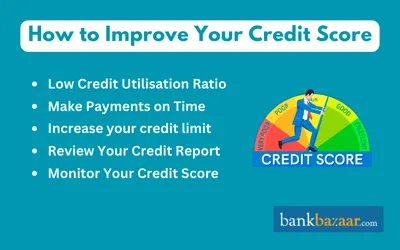
How to Improve CIBIL Score?
Take these steps to increase your CIBIL score and boost your chances of securing credit in the future:
- Use credit responsibly: Regular usage and timely repayments help build a strong credit profile with credit bureaus.
- Avoid becoming a guarantor: A borrower’s default can negatively impact your credit score.
- Limit multiple loan applications: Applying for several loans in a short period may signal financial stress to lenders.
- Increase your credit limit: A higher credit limit with the same spending lowers your credit utilisation ratio.
- Maintain low credit utilisation: To show responsible credit management, keep your credit usage below 30% of the total limit.
- Pay dues on time: To avoid score reduction, always pay credit card bills and loan EMIs promptly.
- Monitor credit activity: To detect errors or unauthorised transactions, regularly review statements and credit reports.
- Restrict new credit applications: Too many credit inquiries can slightly reduce your credit score.
- Ensure consistent repayments: Maintaining a history of on-time payments is crucial for a healthy credit score.
- Choose manageable loan tenures: Opting for longer tenures can lower EMIs and help maintain timely repayments.
How Long Does It Take to Improve a Credit Score?
As per the RBI regulation, the credit score must be updated every 15 days, and regular update keeps credit information fresh. Improving your credit score usually takes four to 12 months, depending on past credit issues and your repayment behaviour.
The details of how long it takes to improve credit score are mentioned below:
- Timely bill payments and consistent repayment history help improve your score gradually.
- Reducing credit utilisation and managing credit responsibly can accelerate improvement.
- Limiting new credit applications helps avoid unnecessary credit inquiries.
- Major negative records like defaults or bankruptcies may take longer to recover from.
- A high credit score can be sustained with bureaus such as Equifax by maintaining consistent and responsible credit habits.
Why Do You Need a Good CIBIL Score?
A good CIBIL score offers several benefits when applying for a loan, such as:
- Your reliability as a timely borrower.
- Increases chances of loan approval and higher loan amounts.
- Helps negotiate for lower interest rates.
- Enables longer repayment tenures.
- Speeds up loan processing by earning lender trust.
- Additional credit card benefits.
- Offers pre-approved loans
What are the Key Factors that Affect Credit Score?
The key factors that affect the credit score are listed below:
- Repayment habits: Strong credit profiles with bureaus like Equifax can be maintained by paying loans and credit card bills on time.
- Credit mix: Having different credit types such as home loans, personal loans, and credit cards shows lenders you can manage varied debt.
- High credit utilisation: Over-dependence on credit and reduction of your score is indicted by using more than 30% of your credit limit.
- Length of credit history: Score can improve if you have a longer credit history as it generally reflects stable financial behaviour.
- Minimum payments only: Paying only the minimum due on credit cards may negatively impact your credit score.
- Closing credit card accounts: Closing a card with a high limit can increase your credit utilisation ratio and lower your score.
- Frequent credit inquiries: Applying for multiple credit products in a short period can indicate credit dependency and hurt your score.
How is Your Credit Score Calculated?
Let us understand how your credit score is calculated:
- 35% - Payment History
- 30% - Credit Utilisation
- 15% - Age of Credit History
- 10% - Type of Credit
- 10% - Credit Inquiries
All the aforementioned factors affect your credit score but the payment history and credit utilisation hamper your credit score the most.
What are the Factors that are Required for Credit Score Calculation?
The factors that required for credit score calculation are mentioned below:
- Payment history: Shows bill payment on time and the number or severity of late payments reported to bureaus like Equifax.
- Amounts owed (credit utilisation): Reflects how much credit you use compared to your total available credit.
- Length of credit history: A longer credit history provides more data on repayment behaviour that indicates lower risk.
- Credit mix: Ability to manage various forms of credit is indicated through different credit types, such as loans and credit cards.
- New credit applications: Too many credit applications at a time can signal higher risk and may reduce your credit score.
What is a Good Credit Score?
A CIBIL score ranges from 300-900, 300 being the lowest or bad CIBIL score and 900 being the highest. Your CIBIL score should be closer to 900 to get the best deals on interest rates for loans. A CIBIL score of 750 and above (750-900) is considered ideal by most lenders like banks and non-banking finance companies (NBFCs).
CIBIL score range | What does it mean for your credit health? |
300-549 |
|
550-649 |
|
650-749 |
|
750-900 |
|
Disclaimer
Display of any trademarks, tradenames, logos and other subject matters of intellectual property belong to their respective intellectual property owners. Display of such IP along with the related product information does not imply BankBazaar's partnership with the owner of the Intellectual Property or issuer/manufacturer of such products.


FAQs on How to Improve Cibil Score Immediately
1.What is the most important way to improve a credit score?
Improving credit score depends on multiple factors and three most important among all are keeping the debt utilization ration below 30%; reviewing credit reports on a daily basis; and clearing debts in full on time.
2.Can my credit score increase by 50 points in a month?
Yes, you can increase your credit score up to 50 points which may even go up to 100 points depending on previous payment history and outstanding debts.
3.What is a good credit score to buy a house?
In India, a credit score of 750 or above is generally considered ideal for securing a home loan. A higher score reported by bureaus like Equifax significantly improves approval of chances and helps borrowers obtain lower interest rates and more favourable loan terms, as it reflects strong creditworthiness.
4.Does checking my CIBIL score often reduce it?
No, checking your own score is a soft inquiry and does not affect your CIBIL score. Only lender checks during loan applications (hard inquiries) can slightly reduce it.
5.What is the fastest way to improve my CIBIL score?
The fastest way to improve your CIBIL score is by paying off outstanding dues, making timely payments, reducing credit usage below 30%, and disputing any errors in your credit report.
6.Can a low CIBIL score stop me from getting a credit card?
Yes, a low CIBIL score may stop you from getting a credit card. But you can opt for a secured credit card (linked to a fixed deposit) to rebuild your score.
7.Will closing an old credit card improve my score?
No, closing an old credit card does not always improve your credit score. It can reduce your credit history length and increase credit usage, both of which may lower your score.
8.How does loan settlement affect my credit score?
Settling a loan (instead of repaying in full) is marked as “Settled” and negatively affects your score. It's better to pay in full if possible.
9.Does increasing my credit limit improve my score?
Yes, increasing your credit limit improves your credit score. This will happen if you spend the same amount, a higher limit lowers your credit utilization ratio, which can help boost your score.
CIBIL Score Requirements for Loans

Disclaimer
Credit Card:
Credit Score:
Personal Loan:
Home Loan:
Fixed Deposit:


Copyright © 2026 BankBazaar.com.