


What Not to Do Right After a Car Accident?
Nobody wants to be involved in a car accident.It not only disrupts your entire day but can also lead to serious injurious and financial loss. On the other hand, car accidents are nearly unavoidable. It is difficult to find a driver who has never been in a car accident. Even while you can't prevent accidents, you can be ready to handle the financial damage that may arise from one by purchasing car insurance.
Additionally, there are several things you should keep away from doing to protect yourself after an accident. It is important to be calm, avoid admitting fault, and follow proper procedures such as informing the police and your insurer promptly to protect your legal and financial interests. Learn the critical errors to avoid after an accident to protect your legal rights and ensure a smooth car insurance claim process.
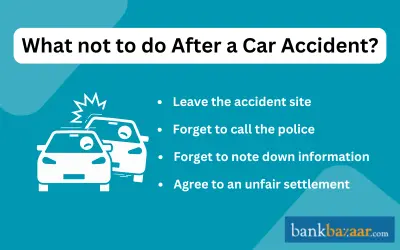
List of 9 Things Not to Do After a Car Accident
below are the 9 things you should not do after a car accident:
- Leave the accident site - The law mandates that anyone who has been involved in a car accident should stop the vehicle immediately. This is irrespective of whether the accident resulted in an injury, death, or property damage. Under the Motor Vehicles Act, 1988, failing to stop and provide necessary help or information can lead to penalties such as fine or even legal action. In case you fail to do so and leave the accident scene, you can be heavily penalized. So, when you are involved in an accident stay at the accident spot and report it to the police. If possible, try to get medical assistance to the injured.
- Forget to call the police - Some people are of the opinion that the cops need to be alerted only if there is a death resulting from the accident. This is simply untrue. It is important to report the accident to the police, irrespective of the damages involved. An FIR needs to be filed as soon as possible. This can be crucial evidence at the time of a car insurance claim, as it would include information about the incident, the condition of the roads, contact information and names of the witnesses, and a description of how the accident took place.
- Get angry - Yes, it is very disappointing to see your prized possession, your car, damaged due to an accident that was not your fault. But remember to not lose your cool at this time. Do not get upset with the third party involved.
- Forget to note down information - Before you leave the accident site, you should try to note down as much information as possible about the incident. Take pictures of the accident scene and jot down the names and contact details of the parties involved (including witnesses). Also ensure that you have details of the insurance company of the third party. Record numbers of license plates, the time and date of the incident, and any other information that seems relevant. Also make sure to document vehicle damage, road conditions, and traffic signs, as these details can support your insurance claim and legal case. If you forget to note down these details you may have a difficult time in case the third party approaches the Motor Accident Claims Tribunal (MACT) for a settlement.
- Apologise or admit fault - Never apologise for an accident immediately after the incident. You should also not admit fault while in conversation with an insurance company. It is best to be honest about the accident and narrate the actual happenings. It is important to let the insurer and authorities determine liability based on evidence, as premature statements may affect claim settlement. If you do apologise to the third party, the insurance company liable to pay for the claim may use your statement against you in order to avoid paying for the damages.
- Neglect the follow-ups - After a car accident, you will have to get in touch with your insurer and even take calls from the insurance company of the third party. You may also have to deal with legal proceedings. It is important that you inform your insurer within stipulated time, as delays can lead to claim rejection as per policy terms. If you do not follow up on these time-consuming tasks, things will not get any better. You can get help from an experienced lawyer, if needed. He/she will assist you in dealing with the aftermath of the accident. Also get legal help when speaking to the insurance provider of the third party, so as to not jeopardise your claim.
- Agree to an unfair settlement - You should refrain from entering into settlement negotiations without the help of a lawyer. Such discussions involve complicated legal clauses that you may not be aware of. Review any settlement carefully before accepting it, ensure that it covers medical expenses, vehicle damages, and other losses before accepting it.
- File a case in the tribunal by yourself - It is important to seek assistance from a lawyer before you approach the Motor Accident Claims Tribunal for a claim settlement. Your insurance company may also represent you in court for specific incidents.
- Worry about increase in car insurance premium - At the unsettling time of a car accident, you should not worry about the future rise in your motor insurance premium. In fact, premium changes generally depend on factors such as claim history, type of claim, and No Claim Bonus (NCB), rather than every accident leading to a hike. So, do not worry about how your insurance will be affected by the incident and proceed as per the guidelines above.
What to Do After a Car Accident
- Stop the vehicle immediately: It is important to stop the car immediately after an accident, regardless of how minor it may seem.
- Ensure safety: Check for injuries to yourself, passengers, and hazards such as fuel leaks or fore risks, and immediately seek medical help.
- Document the accident scene: It is advised to capture clear photos or videos of the accident. This should include damage to vehicles, number plates, road conditions, and any visible injuries. These records act as crucial evidence during claim settlement and legal verification.
- Exchange necessary details: You should collect basic details such as name, contact number, vehicle registration number, and insurance information from the other party. Also note eyewitness details, as they can help in supporting your case if required.
- Inform the police: File an FIR and call police especially in cases involving death, injury, or third party damage. Filing an FIR creates an official record, which is often required for insurance claims and legal procedures.
- Notify your insurance company immediately: It is essential for you to inform your insurer as soon as possible after the accident. Most insurers require intimation within 24 to 48 hours, and delay can result in claim rejection.
- Keep all documents ready: Having all necessary documents such as RC, driving license, or insurance policy helps speed up the claim process.
- Get the vehicle inspected by a surveyor: Don’t try to repair vehicle before inspection as it can result in claim rejection. Wait until the insurer sends a surveyor who normally reaches within 24-48 hours after intimation.
- Choose a network garage: Opting for a network garage approved by your insurer can result in a smooth claim process and allows for cashless repairs while ensuring standardized service and billing.
- Follow up regularly: Stay in touch with your insurer after filing the claim as it helps in tracking claim status and avoid unnecessary delays in settlement.
What Documents are Required to Submit After a Car Accident?
You are required to submit a few documents after your Car Accident to file a Claim. They are as follows:
- Copy of Police FIR
- RC
- Car Insurance Papers
- Driving License
- Estimate of the Repair Costs
Duly filled and signed claim form given by the insurer, which is compulsory to start the claim process.
Photographs of damaged vehicle must be taken at the accident scene, as insurers often need visual proof for assessment.
Medical reports and bills if there are any injuries required in case of personal accident or third-party injury claims.
GST Update: GST of 18% is applicable on car (motor) insurance premiums. Note: As of 22 September 2025, individual health insurance and individual term life premiums are GST-exempt (0%), but motor insurance remains at 18%.
FAQs on What not to do after a Car Accident
1.Under which Section of Indian Law is applicable to Car Accident?
It comes under Section 279 of the Indian Penal Code.
2.Who Pays for Car Accident in India?
The Motor Insurance Claims Tribunal takes care of this after an accident. It determines compensation based on factors such as negligence, insurance coverage, and extent of damage or injury involved.
3.What is the Formality after a car accident?
Filing a Police FIR is the first step after a car accident.
4.Should I intimate my Car Insurance Company after accident?
One must immediately inform your car insurance after an accident as most insurers require intimation within 24 to 48 hours, and failing to do so may lead to claim rejection or delays.
5.What should you do as soon as possible after a car accident?
Checking out if anyone in your car has been injured is the first thing to do right after an accident.

Disclaimer
Credit Card:
Credit Score:
Personal Loan:
Home Loan:
Fixed Deposit:


Copyright © 2026 BankBazaar.com.